Bamboo Flooring Myths & Facts
With so many myths and misconceptions surrounding bamboo flooring, it’s easy for consumers to question the relevance and certainty of their benefits. Below, we debunk some of the best-known bamboo flooring myths and get to the facts behind them.
MYTH #1: Bamboo flooring is soft / hard.
On the Janka hardness scale, strand bamboo flooring has a rating of more than 4,000—harder than the strongest teak, cherry, rosewood, or walnut. Strand woven bamboo flooring is harder than any hardwood, making it a highly sought-after and practical option. It’s a great value because of the strength and durability, so you can be sure it will look good for years to come.
Classic or traditional bamboo floors (in either horizontal or vertical options) are similar in hardness to hickory or pecan. They usually fall around 1,700 on the Janka hardness scale. Though they’re not as hard as strand woven bamboo floors, they’re still plenty strong enough to hold up to normal use in most rooms of your house. It’s important to remember that any flooring will show a scratch if you really beat it up. And the floor is only as good as the finish, which gives the flooring its protection and scratch-resistance.
Note that more coats of finish won’t necessarily make the finish stronger, either. It’s all about getting quality materials and following manufacturer’s instructions on use and care to be sure that they last as long as possible. Be aware that a floor advertised as having several coats of finish may be indicative of lower quality. No matter which type of bamboo flooring you get, it’s always a good idea to put protectors on furniture legs and to lay rugs and mats in high-traffic or messy areas. Yay, rug shopping!

MYTH #2: Bamboo isn’t eco-friendly because it has to be shipped here.
Did you know that most traditional wood floors sold in the US are shipped all the way to China for milling and finishing, and then shipped back? Yikes, talk about jet lag. They might travel twice as far as bamboo, which is harvested in China and then sent to the US for sale.
Also, there’s a big difference in carbon emissions for products shipped over the water versus those are shipped by land. So wood floors that don’t travel as far but have to be trucked will be less eco-friendly than bamboo flooring that makes an ocean freight trip.

MYTH #3: Pandas suffer because of bamboo harvesting.
Moso is the species of bamboo used for flooring, and it’s just plain not on the menu for pandas. Don’t worry that your floor could have been some happy little bear’s food! That’s just not the case. Plus, Pandas live in higher elevation areas, while the bamboo used for flooring is grown in lowlands. Pandas eat over 30 different types of bamboo, most of which are found in the highlands in the Pacific Rim. No adorable bears will go hungry because of bamboo harvesting for flooring.
MYTH #4: Bamboo is ready to be harvested after only 90 days of growth.
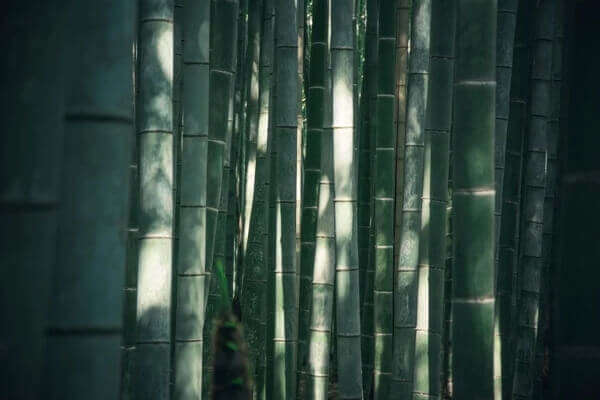
Depending on the conditions and type of bamboo, stalks can reach maturity after 3 months. Those are not strong enough for flooring, however. It takes at least 5 years for the bamboo to reach optimum strength to become floor planks. This is still much faster than hardwood, so don’t feel bad that your floors came from bamboo that took 5 years to grow. Hardwood can take 60 years to reach maturity! That’s a much more significant amount of time and energy to put into building materials.
MYTH #5: All bamboo flooring is the same.
A common misconception people have is that getting a bargain on bamboo flooring is great—bamboo is bamboo, right? But that’s just not true. Unlike traditional hardwood which is graded and has several certifications or labels, bamboo is not graded and doesn’t always come with the same level of information readily available. It sometimes takes a little research to figure out what you’re buying and which brand has the best product for you.
Bamboo flooring companies vary in the raw materials, milling, and finish they use in their products. No matter the price of your product, check for holes, scratches, and inconsistencies in your samples. Note that thicker planks tend to be more stable, and the best finish available contains aluminum oxide which is stronger and more resistant to scratching. No matter what floor or finish you pick, you should always use felt pads under furniture and movable items on your floor to protect the flooring and keep it looking good for many years.

MYTH #6: You are dealing with a manufacturer.
There are very few if any true U.S. bamboo flooring manufacturers, as most companies are importers. This doesn’t lessen their appeal; in fact you want to choose a U.S. based company to purchase from in case you ever have to take legal action. It’s worth it to look into their process and see what the deal is. Some companies are based in the US and might do some of the processing in the United States, but often the mills they use are getting raw materials from a number of different places and through various channels that are hard to pin down. Reputable companies are very involved on the manufacturing side and most have their floors created from Moso Bamboo, which is the sturdiest species and is almost exclusively plantation grown (which helps with consistency).
The old mantra “you get what you pay for” can be tricky with bamboo – some of the big box stores have low quality products that are sold for higher than online quality brands. On the other hand, people who seek the cheapest product often find that they are getting a poor quality floor, or one that doesn’t hold up over time, isn’t sources responsibly, and isn’t made with good materials. Ordering and testing samples from multiple companies is a wonderful way to protect yourself from ordering a crappy product.

MYTH #7: Bamboo is full of formaldehyde and/or is unsafe for you and your family.
There are always a few exceptions that may not have been tested and proven 100% safe before making their way to US shelves, but the vast majority of bamboo floors are safe to put in your home. It’s smart to look into different options and make sure the flooring you’re buying has been tested and certified for air quality including low emission and low VOC as well as testing for formaldehyde and other chemical ingredients. These are some certifications or labels you might look for:
- FloorScore Certification
- CARB 2 Indoor Air Standard
- NAUF (No Added Urea Formaldehyde)
- LEED
- CE marking
- European E1 Norm
Check to ensure the product you’re consider meets the CARB 2 indoor air standard. The amount of formaldehyde in quality bamboo flooring is many times less than the typical finish on regular furniture in your home and is considered an exceptionally safe product to use in everyday living areas.
Almost all bamboo floors made today use trace amounts of phenol-formaldehyde resin as a part of the manufacturing process, but this is on par with what is acceptable and used in other everyday household furniture and cleaning products. Vendors that say bamboo flooring is “formaldehyde-free” usually mean is that the flooring meets a NAUF (No Added Urea Formaldehyde) standard, which is true of just about all strand woven bamboo floors on the market today.

MYTH #8: Bamboo flooring is completely waterproof and resistant to UV fading.
It is less susceptible to water damage than most traditional hardwood floors, but bamboo flooring is not waterproof. If given enough time and a large enough quantity of liquid, it can stain, warp, or cup due to moisture. All puddles should be cleaned up within a day.

MYTH #9: Bamboo Is Sensitive to Humidity And Has Shrinkage and Swelling Problems.
When bamboo flooring is properly acclimated to your climate and installed according to manufacturer’s instructions, you shouldn’t have problems with shrinking or swelling. Occasionally people find that humidity changes cause their floors to swell and planks pop up because not enough room was left around the edge of their installation. Other times, someone may purchase bamboo flooring that’s just a lemon and something happens to make it shrink or swell, but it’s not like that’s a problem for all types of bamboo flooring.
Bamboo flooring has dimensional stability characteristics that are on par with traditional hardwood, so you shouldn’t have problems. Make sure you do some research into the brand first and look for reviews on quality products. Mid-range and higher-end products are less likely to have problems with swelling or shrinking because they’re properly treated to resist moisture and humidity.

To really prevent any shrinking or swelling, the National Wood Flooring Association recommends that you keep your interior humidity between 35%–55% humidity. That’s the standard for all hardwood floors, including bamboo. As long as you purchase a good brand and maintain your floors properly, you’ll have zero humidity issues.
Lastly, take proper care of your bamboo floors by cleaning them with a recommended cleaner (which will likely not be water-based), and clean up spills as quickly as possible.

In general, high-quality bamboo will be able to withstand higher humidity levels (within reason), and lower-quality bamboo will not. But it all depends on the needs of the project and the best product for it.
Areas of the country that experience four distinct seasons may also have an ebb and flow to humidity levels which can affect bamboo more than in the areas where it stays more or less humid throughout the entire year.
In those year-long humid areas (particularly the South), bamboo flooring is less likely to expand and contract after its acclimation period. In other parts of the country, the material is constantly having to adjust, i.e. and move right along with it.

MYTH #10: Bamboo doesn’t last as long as other floors.
This one is 100% false. Somewhere along the line people started getting the idea that bamboo flooring is not as long-lasting as other woods, but it’s not true. As is the case with most things, the life of bamboo flooring depends on its quality, how it was installed, if it is maintained properly, and whether it has experienced moisture problems or other types of damage. High-quality bamboo with a strong finish and good installation can last decades if the climate is maintained and the owners take care to keep it dry and clean.
Remember, covering high traffic areas with mats and rugs reduces wear, as does protecting furniture legs from scuffing the floor. Also keep in mind that high quality strand woven bamboo floors almost never need to be refinished in a residential application!
MYTH #11: Bamboo flooring is expensive.
Bamboo flooring ranges widely in quality, look, durability, size, and more. There are so many options that it’s hard to pin down an “average price” for bamboo flooring, but you can get a good idea by looking at compiled averages based on the style of bamboo plank. Some sources quote $3.84 per square foot as the average for all bamboo, but it’s more accurate to look at cost per square foot for each style.
- Strand Woven Bamboo: $3.00–$6.00 per square foot
- Hand-scraped Bamboo: $4.00–$6.00 per square foot
- Engineered Bamboo: $2.80–$4.00 per square foot
Hardwood can get very pricey quickly as the highest prices for hardwood (some places have high end hardwood up to $10 per square foot) is much higher than high-end bamboo flooring, however.